HIMSS 2026: Rethinking Specimen Chain of Custody at Enterprise Scale
For years, specimen tracking improvements were treated as incremental upgrades. A labeling enhancement. A manual reconciliation step. A barcode expansion inside a single department.
That incremental approach is no longer sufficient.
As health systems grow more complex, the specimen journey now crosses operating rooms, procedural areas, couriers, laboratory accessioning, pathology, and enterprise reporting systems. Each handoff introduces risk. Each manual validation step introduces variability.
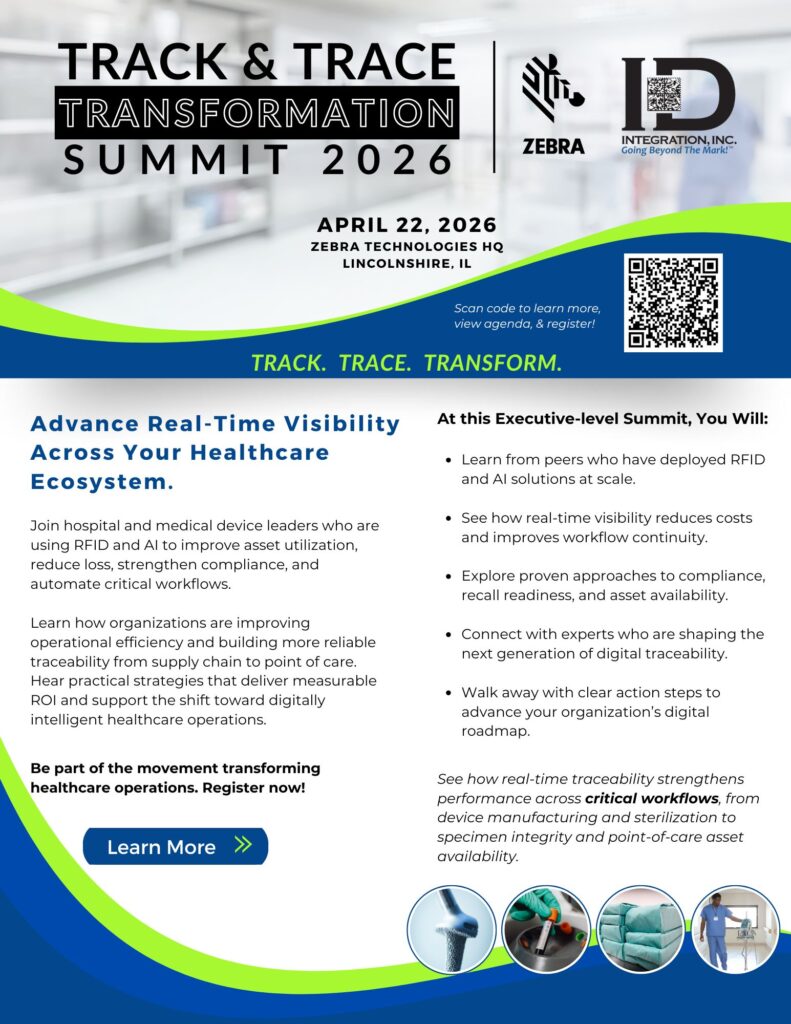
At HIMSS 2026, ID Integration will be in the Zebra Technologies Pavilion at Booth #2435 to engage in a deeper discussion: how to build specimen continuity infrastructure that scales across departments, campuses, and health systems.
The Rising Stakes of Specimen Integrity
Specimen management is no longer just a laboratory concern. It is an enterprise risk issue.
Health systems today face:
- Increased regulatory scrutiny around chain-of-custody documentation
- Heightened expectations for audit defensibility
- Pressure to reduce surgical and pathology delays
- Rising concern over near-miss events that never reach formal reporting
- Expanding multi-site operations where specimens move between facilities
- In this environment, visibility cannot rely solely on manual confirmation or departmental process discipline.
It requires automated validation at the moments that matter most.
A single specimen error can trigger procedure delays, repeat testing, compliance exposure, and reputational damage that far exceeds the cost of prevention. As health systems expand across campuses and outpatient settings, the probability of chain-of-custody gaps increases unless visibility is deliberately engineered.
Enterprise continuity is no longer a best practice. It is a safeguard.
What Modern Specimen Continuity Requires
Enterprise-grade specimen tracking is not simply about labeling. It is about designing a verifiable, integrated chain of custody from collection through final disposition.
At HIMSS, we will be discussing the structural components required to support that model:
Automated Handoff Verification
Passive RFID enables confirmation at key transition points without adding scanning burden to already strained clinical teams.
Real-Time Exception Visibility
Rather than discovering gaps retrospectively, modern systems surface discrepancies as they occur.
Integration with Clinical and Laboratory Systems
Chain-of-custody events must flow seamlessly into LIS, EHR, and enterprise reporting platforms. Visibility isolated from core systems creates more fragmentation, not less.
Scalable Architecture
Solutions must support multi-campus expansion and evolving regulatory expectations without forcing organizations to redesign workflows every two years.
Beyond Pilot Programs
Many hospitals have implemented departmental specimen tracking initiatives with good intent. Fewer have successfully extended those models across perioperative services, pathology, and satellite facilities.
Scaling requires more than tags and readers. It demands:
- Executive alignment
- Governance clarity
- Cross-department collaboration
- Defined metrics tied to patient safety and risk mitigation
Technology deployed without structural planning often results in stalled initiatives or parallel systems that never fully integrate.
At HIMSS 2026, our conversations will center on how to avoid that pattern — and how to design specimen tracking programs that mature alongside the organization.
A Strategic Discussion at HIMSS
Specimen integrity directly impacts patient safety, diagnostic accuracy, and institutional credibility.
If your organization is evaluating long-term improvements in perioperative-to-lab continuity, we welcome the opportunity to discuss what durable, integrated specimen visibility looks like in practice.
You can find ID Integration in the Zebra Technologies Pavilion at Booth #2435.
Let’s move the conversation from incremental fixes to enterprise-grade continuity.
Expanding the Specimen Visibility Conversation
Specimen tracking does not operate in isolation. It intersects with surgical workflows, sterile processing, asset movement, and enterprise data architecture.
If you are exploring broader modernization initiatives, these related resources may provide additional context:
Pre-Analytic Specimen Error Reduction
Why Hospital Tracking Programs Stall — and How to Scale Without Starting Over